- For appointment (+91) 97904 97905
Anesthesiology Hospital in Guduvanchery for Safe Surgical Anaesthesia Care
Anaesthesia plays a crucial role in ensuring safe, comfortable, and controlled surgical procedures. At Deepam Hospitals, our Anesthesiology Department provides specialized anaesthesia care focused on patient safety, accurate monitoring, and effective perioperative management before, during, and after surgery.
As a trusted Anesthesiology Hospital in Guduvanchery, we offer personalized anaesthesia solutions based on each patient’s medical condition, surgical requirement, and overall health profile. Our team follows advanced safety protocols, modern monitoring techniques, and evidence-based practices to support smooth surgical outcomes.
Under the guidance of Dr. Rajarajan Balasubramanian, our department provides comprehensive anaesthesia services, including general anaesthesia, regional anaesthesia, sedation, critical care anaesthesia, and specialized support for high-risk surgeries.
From pre-anaesthesia assessment to postoperative recovery, our approach ensures continuous care throughout the surgical journey, helping patients undergo procedures with confidence and comfort.
Your Anaesthesia Questions Answered
What is anaesthesia, and why is it needed during surgery?
Anaesthesia is a medical technique used to control pain, sensation, and awareness during surgical procedures. It helps patients remain comfortable while allowing surgeons to perform procedures safely and effectively.
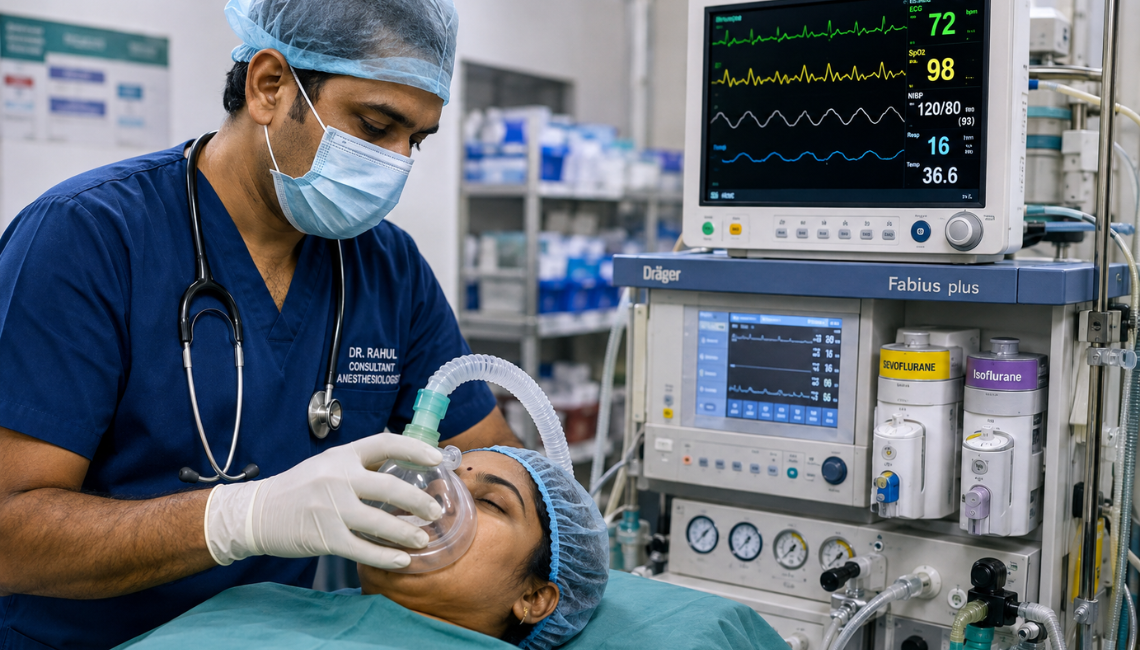
Depending on the type of surgery and patient condition, anaesthesia may involve making the patient completely unconscious, numbing a specific body region, or providing relaxation and pain control through sedation.
Is anaesthesia safe?
Modern anaesthesia is considered highly safe when performed by qualified anaesthesia specialists using proper monitoring and safety protocols. Before surgery, patients undergo a detailed pre-anaesthesia evaluation to assess medical history, allergies, existing health conditions, and surgical requirements.
During the procedure, vital signs such as heart rate, blood pressure, oxygen levels, and breathing are continuously monitored to maintain patient safety.
What does an anesthesiologist do before surgery?
An anesthesiologist evaluates the patient’s overall health, reviews medical records, identifies possible risks, and plans the most suitable anaesthesia technique. They also prepare strategies for airway management, pain control, and postoperative recovery.
How long does anaesthesia stay in the body?
The effect of anaesthesia depends on the type of anaesthesia used, duration of surgery, medications administered, and individual patient factors. The anaesthesia team monitors recovery closely until the patient is stable and comfortable.
Why Choose Deepam Hospitals for Anesthesiology Care?
Choosing the right anaesthesia team is essential for safe surgical outcomes. At Deepam Hospitals, our Anesthesiology Department combines clinical expertise, advanced monitoring facilities, and patient-focused care to provide reliable anaesthesia support.
Experienced Anaesthesia Specialist
Our department is led by Dr. Rajarajan Balasubramanian, who has extensive training and expertise in anaesthesia management, perioperative medicine, pain control, and critical care support.
Personalized Anaesthesia Planning
Every patient receives an individualized anaesthesia plan based on their health condition, surgery type, risk factors, and recovery needs.
Comprehensive Pre-Anaesthesia Assessment
Before surgery, patients undergo detailed evaluation to identify potential concerns and ensure the safest possible anaesthesia approach.
Advanced Monitoring During Surgery
Our anaesthesia team closely monitors vital signs, airway function, oxygen levels, and other critical parameters throughout surgical procedures.
Support for Complex and High-Risk Procedures
Patients undergoing major surgeries, emergency procedures, or high-risk operations receive specialized anaesthesia and critical care support.
Complete Perioperative Care
Our care extends beyond the operation theatre, supporting patients before surgery, during anaesthesia, and throughout postoperative recovery.
What is Anesthesiology?
Anesthesiology is a specialized branch of medicine focused on the management of anaesthesia, pain control, patient monitoring, and critical care during surgical procedures.
Anesthesiologists are trained medical professionals responsible for ensuring patient comfort and safety throughout the surgical process. Their role extends beyond administering anaesthesia—they evaluate patients before surgery, manage vital functions during procedures, and support recovery after surgery.
Modern anesthesiology involves advanced techniques such as general anaesthesia, regional anaesthesia, local anaesthesia, sedation services, airway management, and perioperative medicine.
At Deepam Hospitals, our Anesthesiology Department focuses on delivering safe and effective anaesthesia care through careful assessment, advanced technology, and continuous monitoring.
Anesthesiology Services at a Glance
| Anaesthesia Service | Purpose | Common Procedures | Patient Benefit |
|---|---|---|---|
| General Anaesthesia | Induces a controlled state of unconsciousness for surgery | Major abdominal, cardiac, neurosurgery, orthopaedic procedures | Pain-free surgery with continuous monitoring and maximum comfort |
| Regional Anaesthesia | Numbs a specific region of the body | Joint replacement, limb surgeries, caesarean section | Effective pain relief with faster postoperative recovery |
| Local Anaesthesia | Numbs a small treatment area while the patient remains awake | Minor skin procedures, biopsies, wound repair | Minimal discomfort with quick recovery |
| Sedation Services | Helps patients stay calm and comfortable during procedures | Endoscopy, minor surgeries, diagnostic procedures | Reduced anxiety and improved procedural comfort |
| Pre-Anaesthesia Assessment | Evaluates overall health before surgery | All planned surgical procedures | Identifies risks and ensures a personalized anaesthesia plan |
| High-Risk Surgical Anaesthesia | Provides specialized care for medically complex patients | Cardiac, neurosurgical, emergency, and major surgeries | Enhanced safety through advanced monitoring and multidisciplinary care |
| Obstetric Anaesthesia | Supports pain relief during labour and delivery | Normal delivery, caesarean section | Safe pain management for both mother and baby |
| Paediatric Anaesthesia | Delivers age-appropriate anaesthesia for children | Paediatric general and specialty surgeries | Child-focused care with safe dosing and monitoring |
| Critical Care Anaesthesia | Supports patients requiring intensive monitoring | ICU care, trauma, emergency surgeries | Continuous monitoring and life-support management |
| Postoperative Pain Management | Controls pain after surgery to aid recovery | All surgical procedures | Improved comfort, mobility, and recovery outcomes |
Types of Anaesthesia
Anaesthesia techniques are selected based on the type of procedure, patient health condition, expected duration of surgery, and recovery requirements. The goal is to provide effective pain control, maintain patient safety, and support a smooth surgical experience.
At Deepam Hospitals, our anaesthesia specialists evaluate each case carefully and select the most suitable approach, ensuring personalized care throughout the surgical journey.
General Anaesthesia
General anaesthesia is a technique where medications are administered to place the patient in a controlled state of unconsciousness during surgery. It allows patients to undergo major procedures without feeling pain or being aware of the surgical process.
A skilled anaesthesia team continuously monitors breathing, heart function, oxygen levels, blood pressure, and other vital signs throughout the procedure.
General anaesthesia may be required for:
- Major abdominal surgeries
- Complex surgical procedures
- Long-duration operations
- Procedures requiring complete muscle relaxation
- High-risk surgeries requiring close monitoring
As a trusted General Anaesthesia Hospital in Guduvanchery, Deepam Hospitals follows strict safety protocols and advanced monitoring practices to provide reliable surgical anaesthesia support.

Regional Anaesthesia
Regional anaesthesia involves numbing a specific region of the body while the patient remains awake or lightly sedated. This technique helps control pain during surgery and may support faster recovery compared to certain other anaesthesia methods.
Regional anaesthesia techniques are commonly used for:
- Orthopaedic procedures
- Limb surgeries
- Lower abdominal procedures
- Joint-related surgeries
- Postoperative pain management
Our Regional Anaesthesia Specialist evaluates the patient’s condition and selects the appropriate technique to provide effective pain control with improved comfort.
Local Anaesthesia
Local anaesthesia is used to numb a small and specific area of the body where a minor procedure is performed. The patient remains conscious while the targeted area becomes temporarily insensitive to pain.
Local anaesthesia may be used for:
- Minor surgical procedures
- Skin-related procedures
- Small wound treatments
- Dental and outpatient procedures
The anaesthesia team ensures accurate administration and patient comfort while maintaining safety throughout the procedure.
Sedation Services
Sedation involves using medications to help patients feel relaxed, comfortable, and less anxious during certain medical procedures. Depending on the requirement, sedation can range from minimal relaxation to deeper levels of monitored care.
Sedation services may be beneficial for:
- Diagnostic procedures
- Short surgical procedures
- Minimally invasive treatments
- Patients experiencing procedure-related anxiety
Our specialists carefully monitor breathing, oxygen levels, and vital signs during sedation to maintain patient safety.
High-Risk Surgical Anaesthesia
Certain surgeries require advanced anaesthesia planning due to patient age, existing medical conditions, complex procedures, or increased surgical risks.
At Deepam Hospitals, high-risk surgical anaesthesia involves detailed evaluation, personalized planning, and continuous monitoring to reduce potential complications.
Special attention is provided for patients with:
- Heart-related conditions
- Respiratory disorders
- Diabetes and other chronic conditions
- Previous surgical complications
- Multiple medical concerns
Our anaesthesia team works closely with surgeons and critical care specialists to provide coordinated perioperative support.
Obstetric Anaesthesia
Obstetric anaesthesia focuses on providing safe pain relief and anaesthesia support during pregnancy-related procedures, including childbirth and surgical deliveries.
The anaesthesia team considers the health of both mother and baby while selecting suitable techniques for comfort and safety.
Obstetric anaesthesia services may include:
- Pain management during labour
- Anaesthesia support for caesarean delivery
- Monitoring during pregnancy-related procedures
Careful assessment and continuous monitoring help ensure a safe experience for expecting mothers.
Paediatric Anaesthesia
Children require specialized anaesthesia approaches based on their age, weight, medical condition, and type of procedure.
Paediatric anaesthesia focuses on:
- Child-friendly preparation
- Accurate medication planning
- Safe airway management
- Continuous monitoring during surgery
- Comfortable recovery after procedures
Our team provides attentive care to ensure children receive safe and age-appropriate anaesthesia support.
Anaesthesia for Orthopaedic Surgery
Orthopaedic procedures often require specialized anaesthesia techniques to provide effective pain control and support recovery.
Anaesthesia services for orthopaedic surgeries may include:
- Joint replacement procedures
- Bone and ligament surgeries
- Spine-related procedures
- Sports injury treatments
Regional anaesthesia techniques may be considered when appropriate, helping manage surgical pain and improve postoperative comfort.
Critical Care Support
Anesthesiologists play an important role in critical care by managing patients who require intensive monitoring and medical support.
Our anaesthesia team provides critical care assistance through:
- Airway management
- Ventilator support
- Emergency response support
- Monitoring of critically ill patients
- Perioperative intensive care
For patients undergoing complex procedures, anaesthesia expertise helps maintain stability and supports recovery.
Patient Monitoring
Continuous monitoring is an essential part of safe anaesthesia care. During surgery, the anaesthesia team tracks important body functions to identify and manage any changes immediately.
Monitoring includes:
- Heart rate
- Blood pressure
- Oxygen saturation
- Breathing patterns
- Temperature
- Other vital signs
At Deepam Hospitals, advanced monitoring practices help provide safer surgical anaesthesia and improved patient outcomes.
Safety Protocols in Anaesthesia Care
Patient safety is the foundation of modern anaesthesia practice. Before every procedure, our team follows structured safety measures to reduce risks and ensure better surgical support.
Safety protocols include:
Detailed Pre-Anaesthesia Assessment
Evaluation of medical history, current medications, allergies, previous anaesthesia experiences, and overall health condition.
Individualized Anaesthesia Planning
Selection of the most appropriate anaesthesia technique based on the patient’s requirements.
Operation Theatre Safety Standards
Maintaining strict protocols for equipment readiness, medication management, and emergency preparedness.
Continuous Intraoperative Monitoring
Close observation of vital signs and patient response throughout the surgical procedure.
Postoperative Recovery Support
Monitoring patients in the recovery room and providing guidance for comfortable recovery after anaesthesia.
Dr. Rajarajan Balasubramanian
Anesthesiology Specialist in Guduvanchery
With advanced qualifications and specialized training, Dr. Rajarajan focuses on delivering patient-centered anaesthesia solutions tailored to individual surgical needs.
Areas of Expertise
By combining clinical expertise with careful assessment and advanced monitoring practices, Dr. Rajarajan ensures patients receive safe and effective anaesthesia care throughout their surgical journey.
Patient Journey at Deepam Hospitals
Every patient’s surgical experience involves multiple stages of care. Our anaesthesia team ensures continuous support from pre-surgery evaluation to postoperative recovery.
Before Surgery – Pre-Anaesthesia Assessment
Before any surgical procedure, patients undergo a detailed pre-anaesthesia evaluation to understand their health condition and prepare a safe anaesthesia plan.
During this assessment, the anaesthesia specialist reviews:
- Medical history
- Previous surgeries and anaesthesia experiences
- Current medications
- Allergies
- Existing health conditions
- Required surgical procedure
Based on the evaluation, the team selects the most suitable anaesthesia method and explains the procedure, safety measures, and recovery expectations.
During Surgery – Safe Anaesthesia Management
During the operation, the anesthesiology team remains responsible for maintaining patient comfort, safety, and stability.
The team continuously monitors:
- Heart rate
- Blood pressure
- Oxygen levels
- Breathing function
- Vital signs
- Response to anaesthesia
Advanced monitoring techniques and strict safety protocols help the team identify and manage any changes during surgery.
The anesthesiologist works closely with surgeons and medical teams to provide coordinated surgical care.
After Surgery – Recovery Room Support
Postoperative care is an important part of anaesthesia management. After surgery, patients are monitored in the recovery area until they are stable and comfortable.
The anaesthesia team focuses on:
- Managing postoperative pain
- Monitoring recovery from anaesthesia
- Supporting breathing and vital functions
- Identifying early signs of complications
- Vital signs
- Ensuring a comfortable transition to the next stage of care
Recovery Tips After Anaesthesia
Recovery time after anaesthesia varies depending on the type of procedure, anaesthesia technique, and individual health factors. Following medical advice can support a smoother recovery.
Follow Medication Instructions
Take prescribed medicines as advised by your healthcare team for effective pain control and recovery support.
Stay Hydrated and Rest Properly
Adequate rest and proper hydration can help the body recover after surgery.
Avoid Driving Immediately After Anaesthesia
Patients should avoid driving or operating machinery until they receive clearance from their doctor.
Follow Activity Guidelines
Gradually return to normal activities based on your surgeon’s and anaesthesia team’s recommendations.
Report Unusual Symptoms
Inform your healthcare provider if you experience persistent discomfort, breathing difficulties, excessive dizziness, or other concerns after surgery.
Frequently Asked Questions
An anesthesiologist manages anaesthesia, monitors vital functions, controls pain, and ensures patient safety before, during, and after surgery.
Preparation depends on the type of surgery and anaesthesia planned. Patients may be advised about fasting, medication adjustments, medical tests, and other necessary precautions during the pre-anaesthesia consultation.
The main types include general anaesthesia, regional anaesthesia, local anaesthesia, and sedation. The suitable option depends on the procedure and patient condition.
General anaesthesia can be safely administered to elderly patients with proper evaluation and monitoring. The anaesthesia plan is customized based on age, health conditions, and surgical requirements.
Anaesthesia helps reduce pain, control sensations, provide comfort, and allow surgeons to perform procedures safely.
After anaesthesia, patients are monitored during recovery. Some may experience temporary effects such as drowsiness or mild discomfort, which are managed through appropriate care.
Pre-anaesthesia assessment helps identify possible risks, understand the patient’s health condition, and create a safer anaesthesia plan before surgery.
Why Patients Trust Deepam Hospitals for Anesthesiology Care
Deepam Hospitals provides specialized anaesthesia services focused on safety, comfort, and quality surgical support.
Patients trust our Anesthesiology Department because of:
Experienced Medical Expertise
Led by Dr. Rajarajan Balasubramanian, our team provides specialized anaesthesia care supported by advanced training and clinical experience.
Patient-Centered Approach
Every patient receives personalized evaluation and anaesthesia planning based on their individual healthcare needs.
Advanced Monitoring Facilities
Continuous monitoring and safety protocols help maintain stability throughout surgical procedures.
Complete Perioperative Support
From pre-surgery assessment to postoperative recovery, our team provides coordinated care at every stage.
Multidisciplinary Surgical Support
Our anaesthesia specialists work closely with surgeons, nurses, and critical care teams to support safe surgical outcomes.
Medical Disclaimer
The information provided on this page is for educational purposes only and should not be considered medical advice, diagnosis, or treatment. Always consult a qualified healthcare professional for personalised medical guidance. In case of a medical emergency, seek immediate medical attention or visit the nearest hospital.
Safe Anaesthesia Care for Your Surgical Journey
Choosing the right anaesthesia team plays an important role in achieving a safe and comfortable surgical experience. At Deepam Hospitals, our Anesthesiology Department combines medical expertise, advanced monitoring, and patient-focused care to support every stage of treatment.
Whether you require general anaesthesia, regional anaesthesia, sedation services, or critical care anaesthesia support, our specialists are committed to providing reliable and compassionate care.
Consult Deepam Hospitals for trusted anaesthesia services in Guduvanchery and receive personalized support from experienced anaesthesia specialists.
Contact Us